Comprehensive Approach to Fat Deposits
 Share
Share 
Excess weight is the number one problem in the modern world. While diet and an active lifestyle help reduce overall body weight, they are ineffective in addressing localized fat deposits that “adorn” the figure of almost every person. This issue can be effectively managed with the help of advanced hardware-based techniques, which we propose to discuss in this article.
“Living with Fat”
Adipose tissue begins to form as early as the fourth month of intrauterine development. During the first year of life, adipocytes responsible for fat synthesis and storage increase in size threefold and continue to divide and grow until approximately five years of age, and in some cases even longer. It has been clinically proven that the diameter of adipocytes can increase by 30–40 times, depending on the degree of obesity and the characteristics of adipose tissue, regardless of age. At the same time, the amount and volume of intermuscular and intramuscular fat, as well as abdominal fat, both subcutaneous and visceral (internal), increase proportionally with age. Conversely, the amount of subcutaneous fat in the lower extremities decreases with age.
The subcutaneous fat of the anterior abdominal wall and the upper part of the lower extremities consists of two layers – superficial and deep. The superficial fat layer is composed of compact, dense “fat compartments” enclosed in a well-organized fibrous framework. The deep fat layer consists of looser fat separated by a disorganized network of fibrous septa. Its volume remains relatively constant and does not change with overall weight loss. Therefore, the contours and proportions of the human body directly depend on the condition of the superficial fat layer.
Adipocytes in the deep layers of adipose tissue are more responsive to carbohydrates and utilize them more rapidly than those in the superficial layers. As a result, these fat cells enlarge faster than superficial ones.
This suggests that reducing localized fat deposits is possible only by targeting the deep layers of adipose tissue. Diet alone, unfortunately, will not reduce these deposits.

“A Female Concern”
Men tend to accumulate fat more evenly throughout the body, which is reflected in an increase in abdominal volume and thickening of the torso, neck, and nape. In contrast, women are more often affected by localized fat deposits. Unwanted “fat” in women tends to accumulate primarily in the upper third of the outer and inner thighs, the buttocks, and the lower part of the body.
The causes of these unaesthetic fat deposits may include:
- lipid metabolism disorders and hormonal imbalance;
- protein metabolism disorders, particularly decreased blood albumin levels;
- chronic stress and fatigue;
- genetic predisposition;
- imbalanced nutrition;
- physical inactivity.
Who Is Against Fat?
Today, fewer and fewer people are in favor of surgical solutions, as most prefer to address body contour concerns using non-invasive methods. Their motives are clear and well-founded. This is why there is a growing demand for innovative techniques and devices that can non-invasively, safely, and effectively refine body contours and restore a slimmer, more aesthetic silhouette.
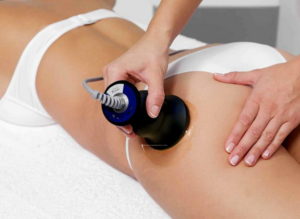
Localized fat deposits can be effectively reduced using cavitation, a highly efficient technique. The ultrasound used in cavitation induces the formation of microbubbles and their subsequent rupture, leading to the release of adipocyte contents. In a single cavitation session, a client can realistically lose up to 2 cm in the circumference of the treated area (approximately up to 10 cm³ of fat). The average course typically consists of 6–8 sessions.
Devices that combine both cavitation and radiofrequency affect fat deposits in a somewhat different way. Cavitation rapidly reduces the volume of fat deposits, while radiofrequency restores tissue firmness and elasticity, making the skin in the treated area tighter and more toned. The synergistic effect of these two techniques within a single device, as offered by leading manufacturers of aesthetic equipment, allows for a reduction of up to 4 cm in the treated area during one procedure. On average, achieving the desired result may require 4 to 8 sessions, depending on the initial volume of localized fat deposits.
In the management of localized fat deposits, devices that combine endodermal massage, bipolar radiofrequency, and infrared light have also proven effective. Adding infrared light to the handpiece used for endodermal massage significantly increases the effectiveness of the procedure due to deep tissue heating, which improves microcirculation in the treated area and enhances the effect of vacuum. When radiofrequency is also incorporated, it becomes possible not only to reduce body volume but also to achieve effective skin tightening and improve overall skin condition. After just one session of such synergistic action, a uniform redistribution of fat occurs within the subcutaneous tissue, blood and lymph flow increase, and metabolic processes accelerate. This is reflected in a reduction of the fat layer and edema, smoothing of the skin texture, and strengthening of tissues. In addition, the treatment time is significantly shorter compared to performing these procedures separately. The duration of the course depends on the specific concern and may range from 4 to 10 sessions.

Fast, Reliable, and Effective
For clients, it is important that the results of procedures aimed at reducing localized fat deposits are visible after the very first session. This is exactly what modern hardware-based technologies can offer. Advanced комплексні approaches allow for the creation of individualized treatment programs, ensuring both effectiveness and patient comfort. Among the key advantages are minimal time required for body contouring, long-lasting results, atraumatic and painless procedures, the absence of visible post-treatment defects, and the ability to combine these methods with other aesthetic treatments.
Modern devices that integrate multiple technologies are simple and convenient to use. Their parameters are controlled by a powerful processor during procedures, minimizing the risk of unintended воздействия (the so-called “human factor”).
Author: Tetyana TSYMBAL – dermatologist and cosmetologist at Beauty Zone salon, methodologist for TriWorks and Biologique Recherche at Beauty Boutique Ukraine
Translation: Nataliya CHAYKA
First published: 2019
Updated in line with current guidelines and relevant research: 2026