Balayage in 2024: How Coloring Techniques Shape the Image of the Modern Artist
 Share
Share 
In today's music industry, an artist's appearance has become an integral part of their professional identity. The stage, lighting, cameras, social media, and constant presence in the public eye have created a demand for a look that is natural, expensive, and trendy all at once. That is why coloring techniques that can work with light and volume without aggressively damaging the hair structure have become particularly popular among musicians, performers, and public figures. In this context, balayage is no longer just a coloring procedure – it has become a tool for creating a stage image that adapts to different formats: from live performances to filming and everyday public activity.
Balayage remains one of the key techniques in modern coloristics, combining an artistic approach, personalization, and relatively low maintenance requirements. From its appearance in French salons in the 1970s to the present day, this technique has gone from a fashionable experiment to a professional standard. Today, balayage is a system of working with light, color, and volume that is being actively reimagined by both Ukrainian and international experts.
The Origin and Essence of Balayage as a Technique
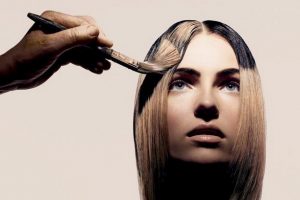
Historically, balayage developed as a response to harsh, contrasting foil highlights. French masters were looking for a method that would allow them to imitate the natural fading of hair in the sun — with soft transitions, without sharp regrowth lines and without the “streak” effect. The term itself comes from the French word meaning “to sweep” or “to brush” — this is exactly what the brush movement looks like when the stylist applies the dye with a free hand.
In professional practice, balayage is defined as selective, multi-layered highlighting of strands followed by toning, with the main emphasis on the middle length and ends rather than the roots. This allows the hair to grow out delicately, and the client does not see a sharp boundary between the natural color and the dyed areas.
The Evolution of the Technique: From Basic Lightening to Complex Gradients
In recent years, balayage has gone far beyond the “light sun effect.” Articles published in 2021 [1] on balayage and reverse balayage techniques analyzed in detail options for different hair lengths, from short cuts to long and curly hair. An important point was that balayage works on short styles by emphasizing texture and ends, and on long styles by creating pronounced but soft gradients that build depth and volume.
At the same time, the difference between balayage, shatush, ombre, and AirTouch was clearly formulated:
- balayage works with diagonal, distributed strokes and does not require constant root coloring;
- ombre gives a more sharp, contrasting transition;
- shatush starts from the roots and the middle of the length;
- AirTouch uses air blowing to select strands.
This classification allowed hairdressers to consciously choose a technique for specific hair, rather than mixing them based on general impressions.
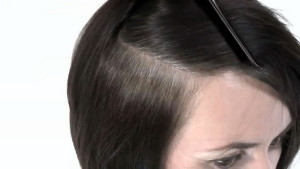
Special attention in these materials was paid to Reverse Balayage — a reverse technique that restores depth to lightened hair. By gently darkening the root zone and part of the length, while preserving the light ends, the client gradually moves away from “total blonde” without losing the feeling of lightness and brightness in their look. This approach was a response to the demand of clients who were tired of excessive brightness but were not ready for drastic dark solutions.
Systemic Methodologies: Balayage as Part of a Smart Color Algorithm
Systemic methodologies described in specialized materials from 2022 played an important role in the further development of professional approaches to coloring [2]. In these sources, balayage is considered not as an isolated technique, but as one of the elements of a broader system of working with color, where the master first diagnoses the hair — its porosity, coloring history, presence of gray hair, pigment type, — and only then chooses the technique: balayage, reverse balayage, AirTouch, decolorization, or a combination thereof.
The aforementioned materials emphasize the importance of working with low concentrations of oxidants, strict control of exposure time, and mandatory hair restoration between stages, which allows combining the visual complexity of the result with safety for the hair structure. It is in this context that Ukrainian expert Anzhelika Slastonenko is mentioned as the author of a systematic approach, where balayage and reverse balayage are integrated into a comprehensive Smart Blending System model focused on predictable results and hair health [2].
Balayage as an Artistic Process: International Expert Opinions
Contemporary professional discourse on balayage is not limited to one school or one country. British colorist Jack Howard, known as one of the “kings of balayage,” emphasizes in his article “Jack Howard reveals the art of balayage” for HJ that the key to this technique is to abandon the “one size fits all” approach and move towards customizing the color application scheme for each client. In his interpretation, balayage is not only about naturalness but also about business strategy: it is individualization that allows you to maintain customer interest in the service for many years, despite the fact that the technique itself has long become mainstream [3].
Another notable international example of a professional understanding of balayage is the analytical article “Balayage vs. Highlights: Pro Guide for Stylists,” published by the NATULIQUE brand on June 4, 2022 [4]. In this article, balayage is considered not as a trend or a separate service, but as a color application procedure that is fundamentally different from classic foil highlights. The authors emphasize that the key difference lies in the application technique: balayage is performed freehand, without foil, with variable pigment saturation — more intense at the ends and more delicate in the middle section.
The article emphasizes that modern balayage is a tool that adapts to the hair structure, natural tone level, and the client's desired visual effect. It is this freedom of application that allows you to create soft, natural gradients without sharp regrowth lines and achieve a “sun-kissed” effect that looks relevant even several months after coloring. The authors of the article emphasize that professionally performed balayage always begins with hair analysis and consultation, rather than choosing a trendy picture.
NATULIQUE pays special attention to the fact that in modern coloristics, balayage has actually become an application method that can be combined with various sectioning schemes — classic or AirTouch. This approach confirms the thesis that balayage and highlights are no longer opposed to each other: highlights describe the method of separating strands, while balayage is an artistic way of working with color on the surface of the hair. It is this combination of technical precision and creative freedom that the authors consider to be the key to the stable popularity of the technique among clients and stylists.
Balayage in the Professional Field: The Role of Analytics and Education
For modern hairdressers, balayage is an area where creativity and analytics intersect. Working with this technique has long gone beyond the intuitive “highlighting the ends.” It requires an understanding of hair structure, dye chemistry, lightening backgrounds, the interaction of warm and cool shades, as well as knowledge of algorithms described in professional methodologies such as the 2022 Smart Blending System [2], where balayage and its variations take center stage as a flexible tool rather than a one-time fashion option.
Experts who systematize experience, form standards, and share their own approaches play an important role in this field. Among them, in modern Ukrainian and international coloristics, there is Anzhelika Slastonenko as the author of solutions where balayage, Reverse Balayage, and comprehensive diagnostics are combined into a coherent, predictable algorithm for the master, focused on hair quality and the aesthetics of the result.
Balayage in modern coloristics should be considered not as a separate lightening technique, but as a universal professional tool for working with light, color, and shape. Analysis of Ukrainian and international publications, as well as the practical experience of industry experts — in particular, Ukrainian colorist Anzhelika Slastonenko, British colorist Jack Howard, and other leading practitioners — shows that the effectiveness of balayage is based on a combination of an artistic approach with systematic hair diagnosis, individualization of the application scheme, and control of chemical processes. It is this expert model of work that allows predictable results to be achieved without compromising hair quality and ensures a long-lasting aesthetic effect. This positions balayage as a sustainable professional framework within contemporary coloristics.
Sources:
- Balayage coloring technique: modern trends, author's approaches, and the role of Reverse Balayage. Interview with Anzhelika Slastonenko. ESTportal, 2021.
https://estportal.com/tehnika-farbuvannia-balayazh-suchasni-tendentsii-reverse-balayage/ - “Smart Blending System”: interview with Anzhelika Slastonenko. Glory Magazine, 2022.
https://glory-magazine.com.ua/smart-blending-system-interv-iu-z-anzhelikoiu-slastonenko/ - Jack Howard reveals the art of balayage. Hairdressers Journal International (HJ), 2019.
https://hji.co.uk/jack-howard-reveals-the-art-of-balayage - Balayage vs. Highlights: Pro Guide for Stylists. NATULIQUE, 2022.
https://www.natulique.com/balayage-vs-highlights/
Maria ZAIKA – hairstylist and colorist with over 20 years of professional experience, international-level master stylist, member of the Ukrainian national hairdressing team, winner of world and European championships and jury member of the British Academy of Hairdressing Saco Ukraine